-

Support: globalsupport@kedacom.com
Sales: international.sales@kedacom.com -

-
Support: globalsupport@kedacom.com
Sales: international.sales@kedacom.com -
To alleviate traffic congestion and improve traffic efficiency, Tongzhou—Beijing’s urban sub-center—is exploring “smart” solutions to tackle this challenge.
In 2025, the District Transportation Commission selected KEDACOM to build a comprehensive smart traffic management platform using systems such as smart traffic control, big data platforms, digital twins, and visualization. The platform comprises two foundational layers and three intelligent engines, serving four specific application scenarios. It establishes a fully closed-loop intelligent mechanism for detecting, diagnosing, simulating, and evaluating traffic issues, thereby creating a new paradigm for traffic management in megacities.
Alleviating Congestion and Improving Flow: Accelerating Commutes
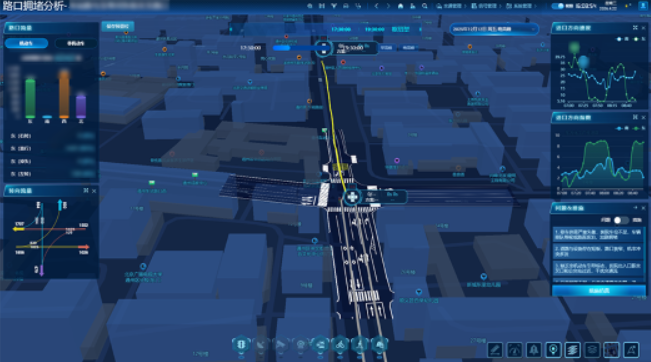
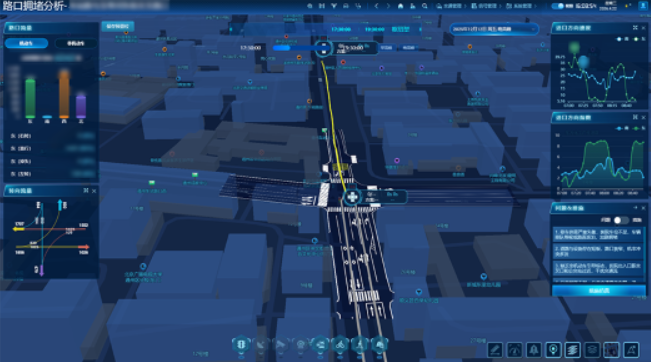
Focusing on 35 key congested intersections in Tongzhou, the project developed an intersection optimization and management model. Work includes reconstructing congestion hotspots, analyzing root causes, optimizing strategies, conducting simulation exercises, and adjusting traffic signal timing. Concurrently, post-implementation evaluations are conducted on intersections where improvements have been made. The effectiveness of these improvements is quantified across multiple dimensions, including traffic efficiency and congestion duration.
3D Digital Twins Make Traffic Conditions “Visible”
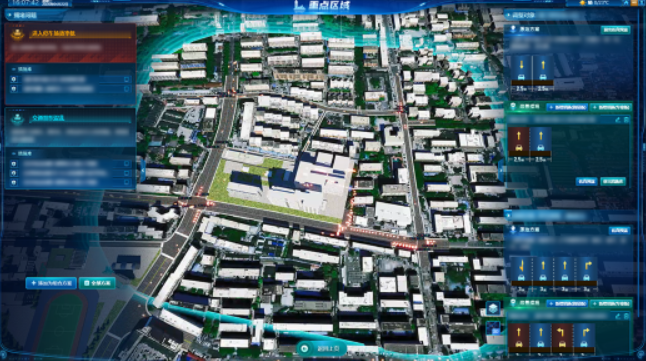
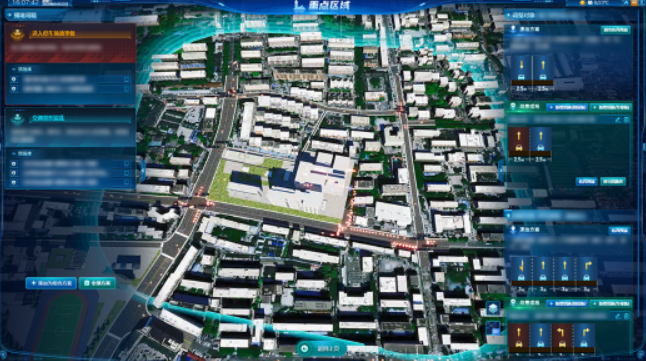
For key areas such as educational institutions, medical facilities, tourist attractions, and commercial districts, we have conducted high-precision 3D twin scene reconstruction to enable real-time dynamic rendering of the district’s road network conditions. By overlaying real-time video and IoT sensor data and integrating spatial knowledge graphs, we conduct in-depth analyses of regional vehicle flow trajectories, travel patterns, parking demand, and public transportation supply to dynamically evaluate the effectiveness of comprehensive traffic management.
Finding the“Optimal Solution” for Route Adjustments
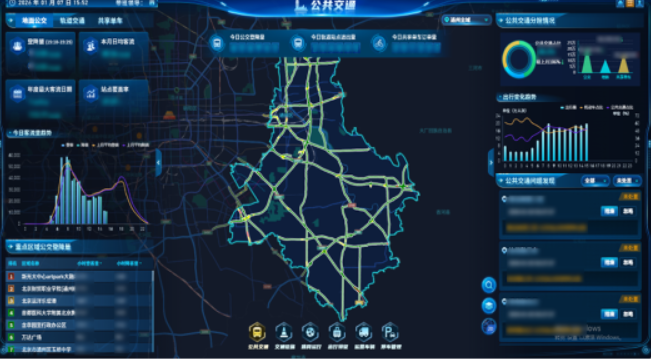
Regarding the overall layout of the bus network, the platform dynamically evaluates and optimizes bus route alignments, stop placements, and capacity allocation based on passenger demand and transfer patterns. By integrating multi-source travel data, it analyzes coverage efficiency, transfer connectivity, and the relationship between supply and demand for transport capacity, thereby supporting the scientific formulation of route adjustment plans.